
THE EVOLUTION OF THE BMW E30 M3 BY REDUX
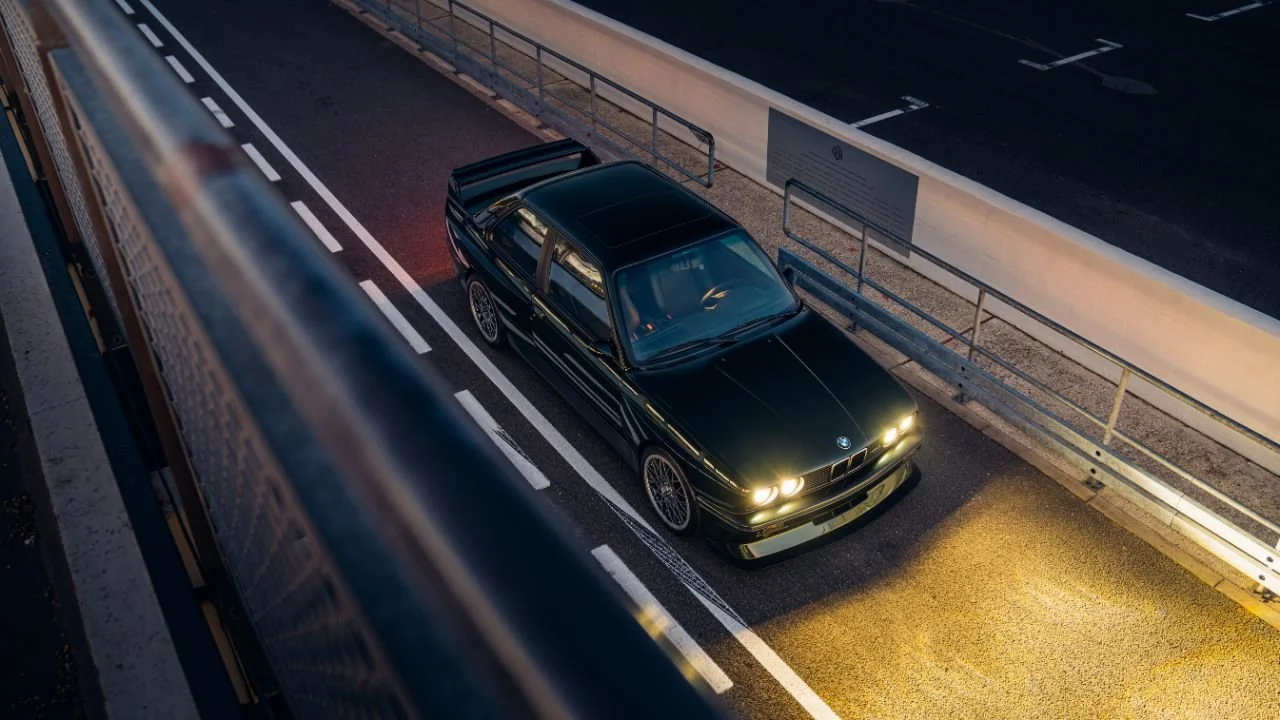
Redux reimagines the road-going version of the legendary BMW E30 M3, the icon that dominated Group A racing and the DTM throughout the 1980s and 1990s. The result is an ultra-exclusive restomod built in just 30 examples, each priced at around €330,000 and requiring an astonishing 4,000 hours of craftsmanship.
A €330,000 “toy” — Restomod with a capital R
Calling it a toy hardly does it justice. With 4,000 hours of meticulous work invested in every car, Redux delivers a restomod with a capital “R”, both aesthetically and mechanically. This is a road-focused reinterpretation of the BMW E30 M3, the touring-car legend that wrote motorsport history, now distilled into a strictly limited run of 30 cars.
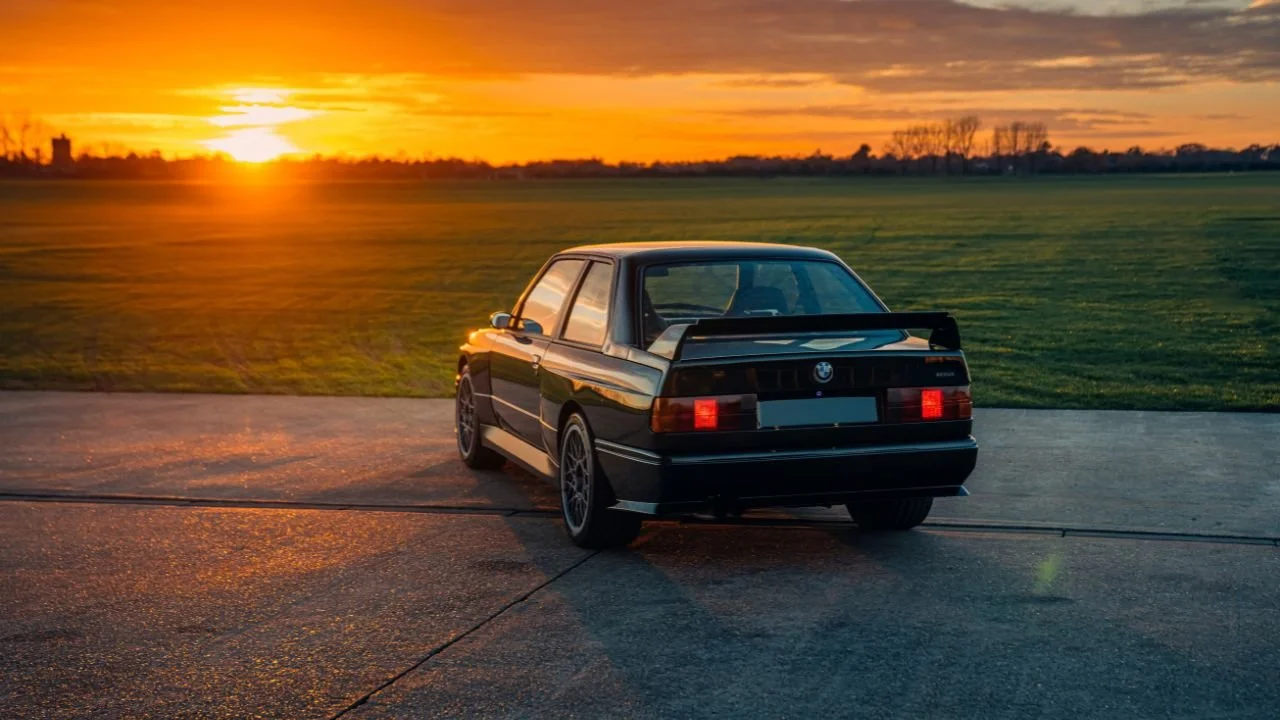
It looks stock — but it isn’t
In recent years, restomods have become increasingly popular, and here at Fleet Magazine we’ve been following the phenomenon closely from the very beginning. The formula is deceptively simple: take a classic car and modernize it. Most projects start from icons that were already unattainable when new and even more so today; only a few choose a comparatively accessible base — though this trend is slowly growing.
The vision behind Redux comes from its CEO Simon Lord. Much like Singer’s philosophy, his idea was to take a symbolic sports car and elevate it exponentially while remaining as faithful as possible to the original. The guiding question was a bold one: “If BMW had built another E30 M3 after the Sport Evo, what would it have looked like?”
The answer is a limited series of 30 evolved E30 M3s — almost a modern-day E30 M3 CSL — paying homage to a timeless icon first unveiled at the Frankfurt Motor Show in 1985.
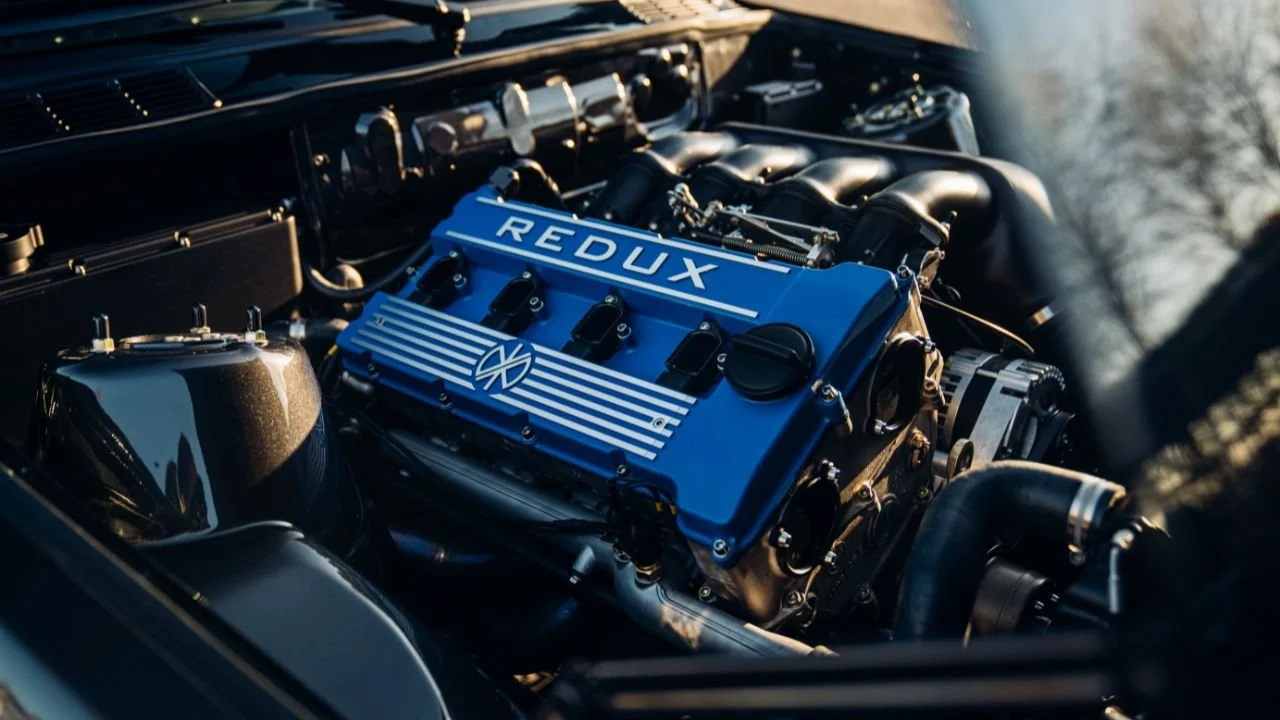
Where does Redux start? With the engine.
Weight goes down, power goes up. The goal was never to create something ultra-modern, but rather to introduce thoughtful, incremental improvements while respecting the original character.
The legendary S14 engine is almost entirely rebuilt. Displacement grows from the original 2.3 litres to 2.5 litres, delivering around 300 hp (220 kW) and 280 Nm of torque — a significant step forward over the stock car. Redux engineers add revised individual throttle bodies, 95 mm pistons, a BMW Motorsport crankshaft, and a bespoke hand-built exhaust system.
Thanks to an almost entirely new body — with all panels together weighing just 46 kg — overall weight is reduced by more than 50 kg, resulting in a kerb weight of approximately 1,150 kg. The gearbox remains the classic five-speed with dogleg first gear, while the chassis is upgraded with adjustable anti-roll bars. Braking performance is brought up to modern standards with six-piston AP Racing calipers, 362 mm front discs and 315 mm rear discs.
And the design?
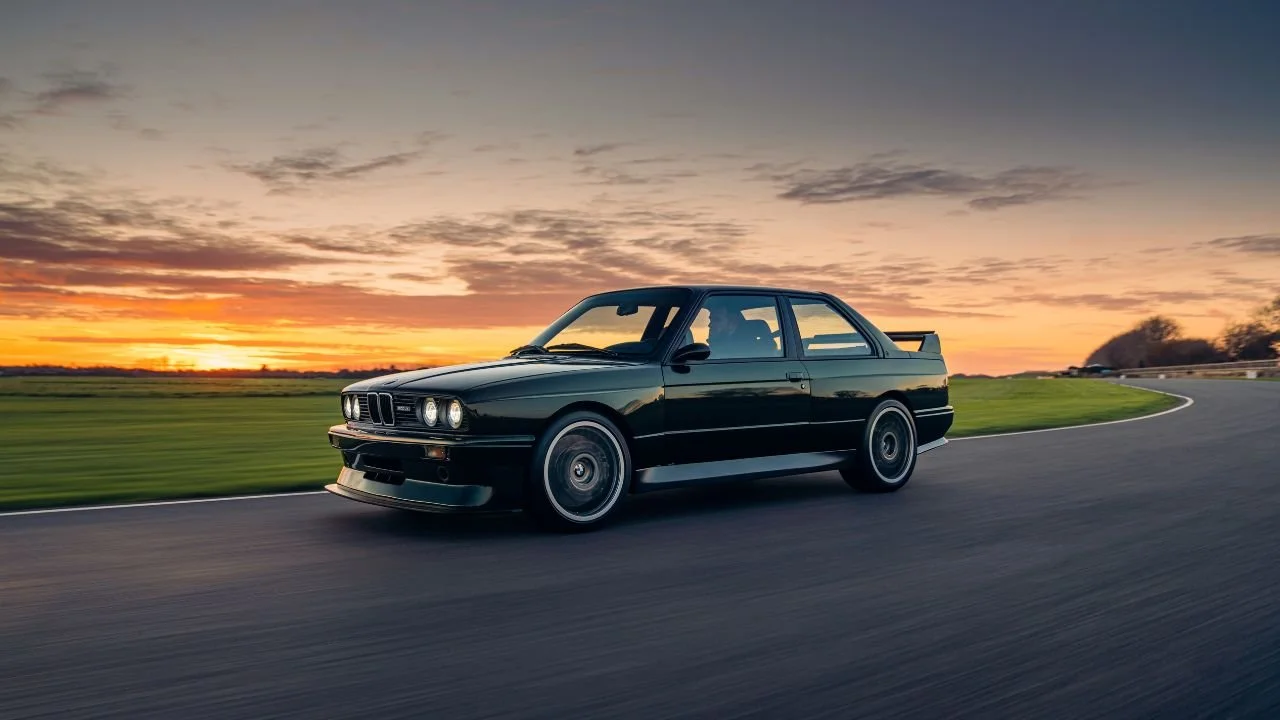
Redux enhances an already iconic design without ever compromising it. The E30 M3 was a homologation car built to allow BMW to compete in the DTM against Mercedes, and its original road-car styling closely echoed 1980s touring-car aesthetics: sharp, square, and purposeful.
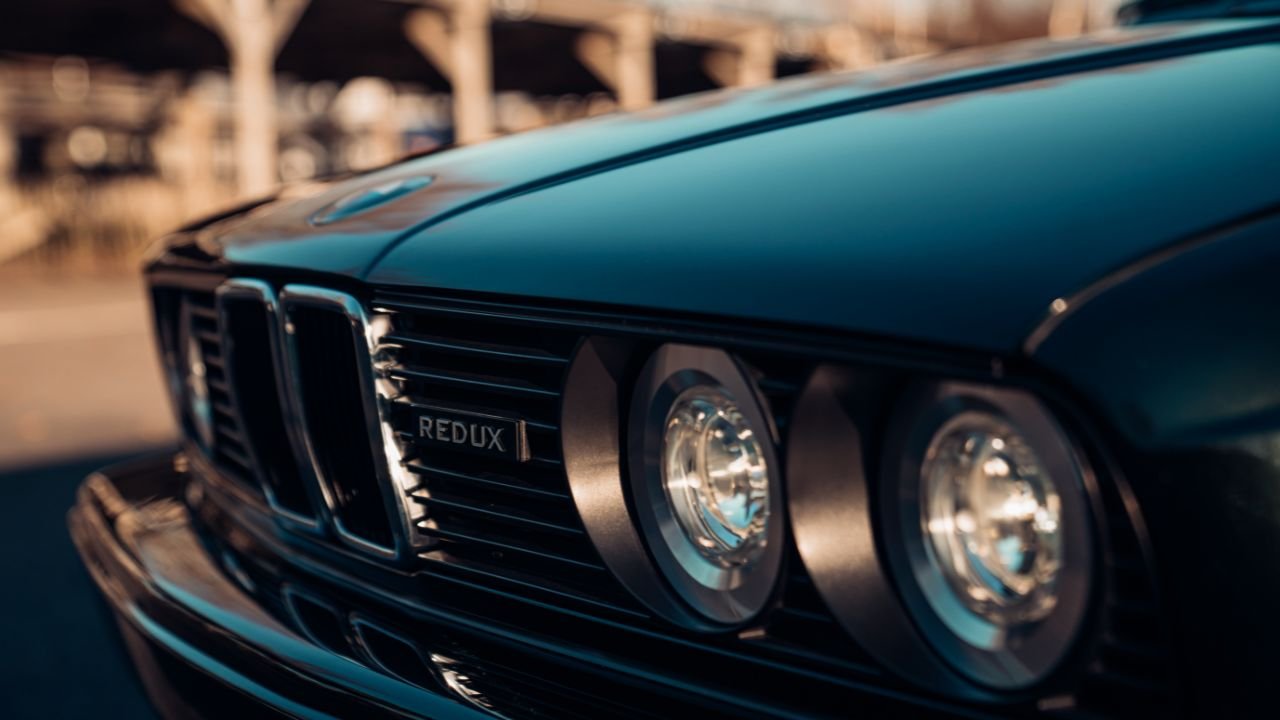
At the front, changes are subtle — modern lighting and a carbon-fiber splitter. The wheel arches are slightly more squared-off, giving the car a more aggressive, race-ready stance and making room for 18-inch BBS wheels. The rear wing now features an adjustable section and sits slightly higher, creating a flatter, more contemporary profile. The front bumper is widened by 40 mm, while more pronounced side skirts lower the visual ride height.
A crucial detail: bumpers, fenders, roof and side skirts are all made from carbon fiber. The paint alone requires over 600 hours of work.
Inside? Discreet, and true to the original.
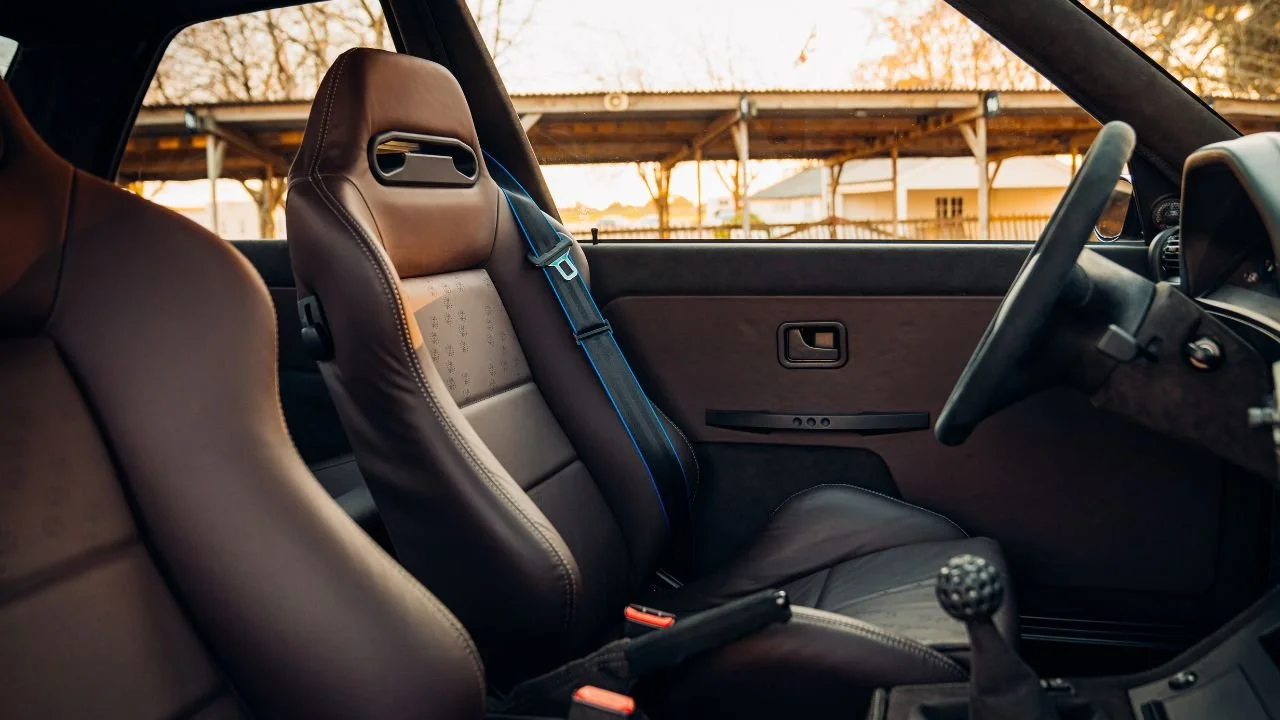
The interior remains faithful to the spirit of the original E30 M3. There are no touchscreens here — just a period-correct Blaupunkt radio that blends seamlessly into the cabin. Recaro sport seats are upholstered in sumptuous Nappa leather, while the original black plastic dashboard elements are replaced with machined aluminum.
A discreetly hidden MoTeC keypad controls an LED roof-mounted display, which replaces the original BMW analog check panel — a subtle nod to modern technology without disrupting the classic atmosphere.
In short, Redux hasn’t reinvented the E30 M3. It has simply answered the question of what it could have been, had history taken a slightly different turn.
Technology Without Betrayal
Modernity announces itself through details rather than disruption. The lighting elements are fully LED, seamlessly integrated into the bodywork. Chrome is banished, along with any decorative excess: door handles disappear into the surface, leaving the bodywork clean and uninterrupted. The long bonnet’s central bulge is accentuated, adding a subtle sense of latent power, while at the rear, two assertive exhaust outlets underline the car’s mechanical honesty.
The wheels are a statement in themselves: alloy rims partially shrouded in carbon fiber, defined by a bold three-spoke graphic that bridges heritage and futurism.
Inside, the transformation is more radical—but no less considered. Traditional analog instruments are reinterpreted through digital screens that mimic classic dials while offering full configurability. It is a cockpit that respects memory without being trapped by it. Crucially, physical controls remain, as does the manual gear lever—non-negotiable elements in a car that still defines driving as a tactile experience.
An E-Type for the Present Tense
Callum’s E-Type is not an exercise in nostalgia, nor a provocation for provocation’s sake. It is a calm, confident meditation on what happens when one of history’s most beautiful cars is allowed to evolve—quietly, intelligently—into the present day.
Whether it ever leaves the screen and touches asphalt is secondary. The message is already clear: even legends can be edited, as long as the hand is guided by respect, restraint, and a deep understanding of why they mattered in the first place..